Why Does Carpet Still Smell Musty After Drying in Honolulu, HI 96859?
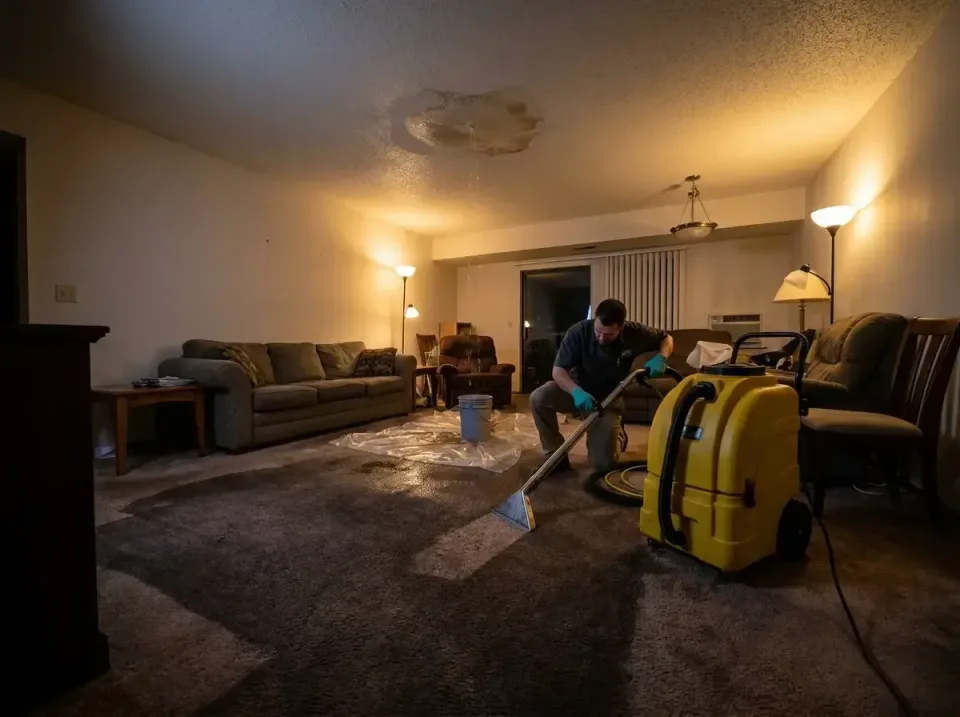
Musty Carpet Odor and Returning Mold Spots
A musty smell after carpet drying usually means moisture remains beneath the carpet, inside padding, or in nearby materials; mold spots returning after cleaning point to the same hidden source. In Honolulu’s humid conditions, surface dryness can arrive before the deeper layers are truly dry. A carpet may feel dry while trapped moisture continues feeding odor under furniture, along tack strips, or beside walls. AAA Water Damage Pros checks the carpet system rather than masking the smell with fragrance. If you are outside Honolulu, the service areas overview can help explain how water-damage work is handled across different properties. Persistent odor, brown discoloration, or recurring spots deserves inspection before another cleaning treatment.
Five Signs the Carpet Needs More Than Cleaning
-
Musty odor: A lingering smell often means moisture is trapped below the visible carpet surface.
-
Brown staining: Spreading discoloration can reflect wicking, where dissolved soil moves upward as materials dry.
-
Swollen flooring: Soft, swollen flooring areas suggest the pad, subfloor, or adhesive may still be affected.
-
Wall moisture: Wet drywall below baseboards can keep nearby carpet edges damp even after extraction.
-
Humidity readings: Psychrometrics compares temperature, humidity, and grains per pound to show whether a room can keep drying; water-damage drying guidance can help property owners understand why air conditions matter.
A water claw is a subsurface carpet extraction tool that reaches moisture ordinary vacuuming may leave behind. Drying verification means confirming target moisture conditions with readings rather than relying on touch or odor alone. The ANSI/IICRC S500 Standard for Professional Water Damage Restoration provides a useful framework for documenting this work.
Carpet and Padding Drying: Why Surface Cleaning Fails
The smell can persist because the carpet face is dry while the backing or pad remains damp. Carpet and padding drying must address the full assembly, including the seam, tack strip, adhesive, and subfloor. Carpet and padding salvage is more likely when extraction starts before the pad compresses, separates, or develops a lasting odor. A Water claw can pull moisture from beneath the carpet where a standard wand cannot reach. AAA Water Damage Pros may pair that work with careful agitation and controlled airflow rather than repeatedly applying deodorizer. In apartment and multifamily housing, limited access may make a portable extractor more practical than a truck-mounted unit.
Wicking, Stains, and Hidden Wall Moisture
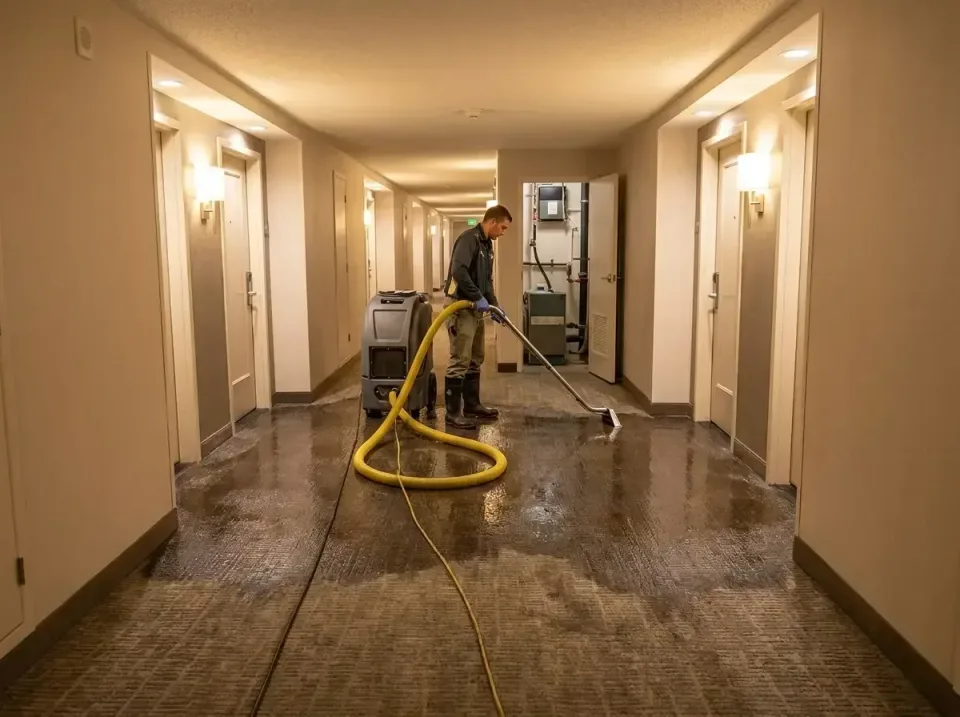
Brown water stains spreading after drying often result from wicking: dissolved soil or dye migrates toward the surface as moisture moves through fibers. The same capillary movement can carry dampness from wet drywall below baseboards into carpet edges. A thermal imaging camera can locate suspicious patterns, but moisture meters confirm whether the material is actually wet. Carpet and padding salvage becomes less likely when delamination, or carpet backing separation, has begun. For commercial structural drying in a hotel, office, or retail space, technicians need room-by-room drying logs so one dry-looking hallway does not hide a wet wall cavity. A wall-cavity inspection may be needed before carpet cleaning resumes.
When Cleaning Cannot Solve the Odor
Carpet steam cleaning can remove ordinary soil, but it cannot correct an active leak, soaked padding, or moisture inside a wall. The source may be a failed appliance connection, a roof intrusion, a plumbing chase, or moisture entering from a crawl space. Prochem equipment and cleaning chemistry can be useful after extraction and drying, but cleaning products should not substitute for source control. Melville Bissell, the carpet sweeper inventor, helped popularize mechanical carpet care; modern restoration still depends on measurement and material judgment rather than surface appearance. If the odor returns after two cleanings, ask for subfloor inspection and padding evaluation instead of another fragrance treatment.
A Practical Drying and Salvage Decision
Technicians separate carpet and padding salvage from materials that need removal. Padding that remains saturated, crumbles, or smells strongly may cost less to replace than to dry repeatedly. Injectidry wall-cavity drying systems can help reach enclosed spaces when wall materials are suitable for controlled drying. For a school, healthcare facility, or office, commercial structural drying also requires planning around occupants, equipment placement, and access routes. AAA Water Damage Pros can document conditions before contents movement, identify the affected assembly, and explain whether carpet replacement, targeted drying, or additional inspection is the sensible path. That distinction prevents paying for repeated cleaning while secondary damage continues.
Which Drying Option Fits a Musty Carpet Problem?
The right option depends on where the moisture sits, how much material is affected, and whether contamination is present. Crawl-space moisture control may be necessary when odor returns from below rather than from the carpet itself. Room-by-room drying logs and daily moisture measurements help show whether the chosen method is working; restoration process information also illustrates why documentation matters.
| Option | Best for | Key detail |
|---|---|---|
| Portable extraction | Apartments, stairs, and tight rooms | Compact access; lower production than truck-mounted extraction |
| Truck-mounted extraction | Larger accessible areas | High-volume removal; limited by hose and parking access |
| Carpet and padding drying | Damp carpet assemblies | May require subsurface extraction and padding evaluation |
| Crawl-space moisture control | Odor returning from below | Addresses the moisture source beneath the floor |
| Commercial structural drying | Hotels, offices, and retail spaces | Uses logs, daily readings, and coordinated access |
A 20-yard debris container may be appropriate only when damaged padding, drywall, or other materials require removal.
Six Steps to Check Musty Carpet Moisture
-
Photograph conditions: Record stains, lifted edges, swollen flooring, and contents before anything is moved.
-
Clear the route: Leave a 36-inch clear doorway where possible and protect occupant paths before equipment arrives.
-
Check access logistics: Coordinate elevator and loading-dock access in multifamily or commercial buildings so extraction equipment can be placed safely.
-
Isolate contamination: Separate sewage-contaminated contents and keep affected zones isolated before extraction.
-
Protect occupants: Keep equipment away from an accessible restroom and maintain safe passage during drying.
-
Verify progress: Apply the monitoring rule by revisiting readings until drying goals stabilize; the US EPA Mold Remediation in Schools and Commercial Buildings guidance is useful when recurring growth raises concern.
Do not handle wet outlets, panels, or energized equipment. AAA Water Damage Pros can review the photographs and moisture pattern before recommending carpet cleaning or removal.
Typical Cost Ranges for Musty Carpet Restoration
The final price depends on the size of the affected area, contamination, access, and how long equipment must remain onsite. Regional labor and disposal practices can change the total in Honolulu.
-
Small room extraction: $500–$1,500, mainly influenced by water volume.
-
Basement drying or basement dewatering: $1,500–$5,000, based on affected square footage.
-
Sewage cleanup: $2,000–$8,000, based on contamination category.
-
Mold remediation: $1,500–$6,000, based on containment and demolition.
-
Commercial drying: $5,000–$20,000, based on equipment duration.
-
Storm cleanup: $3,000–$15,000, based on access and structural damage.
The recommended drying window is 24–48 hours for mold prevention, but an older odor problem may require inspection before work begins. Final estimates vary with water category, affected materials, access, equipment duration, and local disposal requirements.
The 24–48 Hour Drying Check That Prevents Delamination
A carpet is not ready for final cleaning just because the face feels dry. Compare moisture readings from affected materials with an unaffected baseline, then check psychrometric readings for temperature, relative humidity, and grains per pound before removing equipment.
A low-grain-refrigerant LGR dehumidifier can remove vapor while the carpet assembly continues drying. This matters because delamination, or carpet backing separation, can develop when moisture remains trapped and create secondary damage after the visible spill is gone. An antimicrobial treatment may be appropriate after physical cleaning, but it does not replace extraction or source correction. Common mistake: assuming a strong deodorizer proves the carpet is dry; odor can be covered temporarily while the wet pad continues affecting the room.
Restore Fresh Carpet After Hidden Moisture
A musty carpet smell usually calls for moisture tracing, not another round of surface deodorizer. In Honolulu, AAA Water Damage Pros can assess carpet and padding remaining soaked, inspect nearby flooring, and determine whether mold inspection and testing, antimicrobial treatment and sanitization, or carpet steam cleaning belongs at the end of the job. The proper sequence is source correction, extraction, drying, verification, and then cleaning. If you need broader coverage, the all service areas page provides a path to regional service information. For a practical next step, photograph the affected room and call AAA Water Damage Pros at (833) 710-2743 to discuss an inspection and quote.
Frequently Asked Questions
Why does carpet still smell musty after Carpet Water Extraction & Drying?
Can Wet Carpet Padding Removal & Drying stop the odor if mold spots return?
How long should carpet stay under drying equipment after water damage?
Is musty carpet after a sewage backup safe to clean myself?
When should I hire AAA Water Damage Pros for Moisture Meter Inspection & Humidity Monitoring?
Explore All Services
Browse all nationwide service options and choose the right fit for your project.
Homeowners, property managers, and contractors book Honolulu extraction and structural drying for wet carpets, floors, and walls.
Call NowHomeowners, property managers, and contractors book Honolulu flood extraction, structural drying, and storm cleanup after water emergencies.
Call NowHomeowners and property managers book Honolulu basement dewatering, moisture checks, and controlled humidity drying after leaks or flooding.
Call NowHomeowners, contractors, and property managers book Honolulu crawl-space extraction to remove water and control lingering moisture.
Call NowHomeowners, property managers, and contractors book Honolulu wet carpet padding removal, extraction, and drying after leaks or flooding.
Call NowLocal carpet water extraction & drying for Honolulu with clear pricing drivers, weight limits, and scheduling you can plan around.
Call NowHomeowners, property managers, and contractors book Honolulu sewage extraction for contaminated water, padding, drywall, and odor cleanup.
Call NowHomeowners, property managers, and contractors book Honolulu Category 3 black water removal for sewage or floodwater contamination.
Call NowHomeowners, contractors, and property managers book Honolulu subfloor inspections, moisture readings, and drying verification after water damage.
Call NowHomeowners in Honolulu book residential cleanup for water extraction, structural drying, carpet care, and moisture checks.
Call NowCommercial water extraction and structural drying for Honolulu property managers, contractors, offices, and retail spaces.
Call NowHomeowners and property managers book Honolulu storm flood extraction for contaminated water, soaked carpet, and structural drying.
Call NowHomeowners and property managers book Honolulu mold remediation for contaminated drywall, damp carpets, and recurring mold growth.
Call NowHomeowners, contractors, and property managers book Honolulu mold inspections to find hidden moisture and confirm indoor conditions.
Call NowHomeowners, contractors, and property managers book wall and drywall mold removal for concealed moisture and contaminated materials in Honolulu.
Call NowHomeowners, property managers, and contractors book Honolulu black mold remediation for contained removal and moisture control.
Call NowHomeowners and property managers book Honolulu attic mold removal, ventilation drying, and moisture checks after leaks or humidity problems.
Call NowHomeowners and property managers book Honolulu duct mold inspection, containment, HEPA cleaning, and moisture control.
Call NowHomeowners and property managers book Honolulu antimicrobial treatment for odor, surface contamination, and post-water cleanup.
Call NowWet Carpet Cleaning & Odor Removal in Honolulu — practical container sizing, placement guidance, and disposal rules explained before you book.
Call NowHomeowners, managers, and contractors book Honolulu rug and upholstery extraction after leaks, floods, or soaked carpet contents.
Call NowHomeowners and property managers book Honolulu air-quality testing, mold checks, and prevention after moisture or water damage.
Call NowHomeowners and property managers book Honolulu carpet steam cleaning to remove flood residue, odors, and moisture from carpeted rooms.
Call NowHomeowners, contractors, and property managers book Honolulu moisture readings to find hidden dampness and track drying conditions.
Call NowHomeowners, property managers, and contractors book Honolulu claim documentation for water damage, mold inspection, and repair records.
Call NowBrowse by State
Select your region to see local water damage restoration & carpet care providers and cities we cover.
Need Nationwide Water Damage Restoration & Carpet Care?
We connect you with trusted local providers in your state or city. Call or email us today.